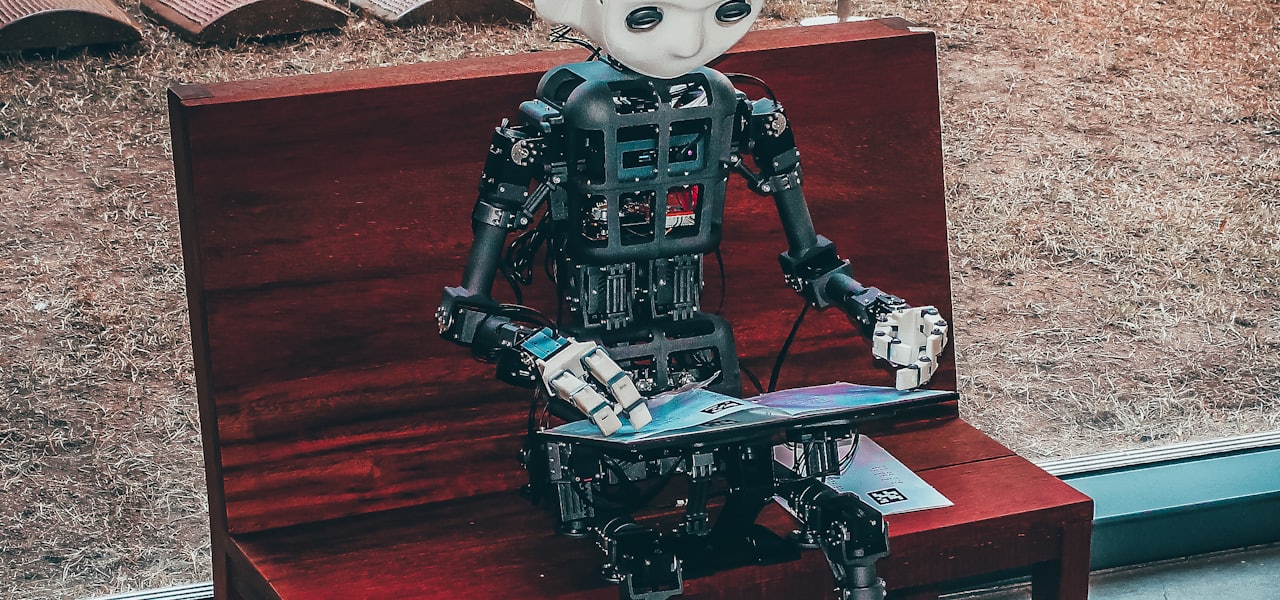
AI Face Editing

AI Face Editing — independent reviews, comparisons, pricing and step-by-step guides on Aizhi.

  • Nolot

    Nolot

    Nolot is a chess test suite with 11 positions from real games. They were compiled by Pierre Nolot (French: [nɔ.lo]) for the French chess magazine Gambisco and posted on the rec.games.chess Usenet group in 1994. They were designed to be particularly hard to solve for chess engines to solve at the time, although modern engines can find a solution near-instantaneously. == Problem 1 == FEN: r3qb1k/1b4p1/p2pr2p/3n4/Pnp1N1N1/6RP/1B3PP1/1B1QR1K1 w - - 0 1 26.Nxh6!! c3 (26... Rxh6 27.Nxd6 Qh5 (best) 28.Rg5! Qxd1 29.Nf7+ Kg8 30.Nxh6+ Kh8 31.Rxd1 c3 32.Nf7+ Kg8 33.Bg6! Nf4 34.Bxc3 Nxg6 35.Bxb4 Kxf7 36.Rd7+ Kf6 37.Rxg6+ Kxg6 38.Rxb7 ±) 27.Nf5! cxb2 28.Qg4 Bc8 (28... g6!? 29.Kh2! 29.Qd7 30.Nh4 Bc6 31.Nc5! dxc 32.Rxe6 Nf6 33.Nxg6+ Kg7 34.Qg5 Nbd5 35.Ne5 Kh8 36.Nxd7 ±) 29.Qh4+ Rh6 30.Nxh6 gxh6 31.Kh2! Qe5 32.Ng5 Qf6 33.Re8 Bf5 34.Qxh6 (missing a mate in 6: 34.Nf7+ Qxf7 35.Qxh6+ Bh7 36.Rxa8 Nf6 37.Rxf8 Qxf8 38.Qxf8+ Ng8 39.Qg7#) 34...Qxh6 35.Nf7+ Kh7 36.Bxf5+ Qg6 37.Bxg6+ Kg7 38.Rxa8 Be7 39.Rb8 a5 40.Be4+ Kxf7 41.Bxd5+ 1–0 The best Novag computer, the Diablo 68000, finds 26. Nxh6 after seven and a half months (Pierre Nolot has let it run on the position for 14 months and one day, until a power failure stopped an analysis of over 80,000,000,000 nodes.) but for wrong reasons: it evaluates white's position as inferior and thinks this move would enable it to draw. Today Gambit Tiger 2.0 for example can find it quite quickly: Most free engines running on 64-bit processors in 2010 could solve this problem and the others in a few seconds. 1.Qd4 c3 2.Bxc3 Nxc3 3.Qxb4 Nxe4 4.Qxb7 Rb8 5.Qxb8 Qxb8 6.Bxe4 d5 7.Rb1 μ (-1.20) Depth: 12 00:00:09 6055 kN 1.Nxh6 c3 2.Nf5 cxb2 3.Qg4 Rb8 4.Nxg7 Rg6 5.Qxg6 Qxg6 6.Rxg6 Bxg7 7.Nxd6 ³ (-0.48) Depth: 12 00:00:21 14368 kN 1.Nxh6 c3 2.Nf5 cxb2 3.Qg4 Rc8 4.Nxg7 Rg6 5.Nxe8 Rxg4 6.Rxg4 Rxe8 7.Rg6 μ (-0.74) Depth: 13 00:00:55 38455 kN 1.Ne3 Rxe4 2.Bxe4 Qxe4 3.Nxd5 Qxd5 4.Qc1 Qf5 5.Qxh6+ Qh7 6.Qe6 Nd3 7.Re2 Nxb2 8.Rxb2 ³ (-0.58) Depth: 13 00:01:30 62979 kN 1.Ne3 Rxe4 ³ (-0.58) Depth: 14 00:02:02 84941 kN 1.Ne3 Nxe3 2.Rexe3 Bxe4 3.Qg4 Rg6 4.Qxe4 Qxe4 5.Bxe4 Rxg3 6.Rxg3 d5 7.Bf5 Re8 8.Bc3 ³ (-0.30) Depth: 15 00:03:05 128968 kN 1.Nxh6 ² (0.32) Depth: 15 00:07:58 350813 kN With the next ply showing a clear advantage. Stockfish 14dev 64bit 4CPU running on 2020 hardware recognises the significance of Nxh6!! in 1 second. Stockfish_21092606_x64_avx2: NNUE evaluation using nn-13406b1dcbe0.nnue enabled. 19/32 00:01 7708k 4882k +3,00 Nxh6 Rxh6 Nxd6 Qh5 Bg6 Qxd1 Nf7+ Kg8 Nxh6+ gxh6 Bh5+ Kh7 Rxd1 c3 Bxc3 Nxc3 Rd7+ Kh8 Rxb7 Ne4 Re3 Nxf2 Kxf2 Bc5 Ke2 Bxe3 Kxe3 Nd5+ Kf2 49/73 15:02 5118270k 5673k +6,15 Nxh6 Rxh6 Nxd6 Qh5 Rg5 Qxd1 Nf7+ Kg8 Nxh6+ Kh8 Rxd1 c3 Nf7+ Kg8 Bg6 Nf4 Bxc3 Nbd5 Rb1 Bc6 Bd2 Nxg6 Rxg6 Ne7 Rxc6 Nxc6 Rb6 Rc8 Ng5 a5 Ra6 Bb4 Be3 Ne5 Bd4 Nc6 Bb6 Bd2 h4 Kf8 Bc5+ Kg8 Be3 Bxe3 fxe3 Kf8 Kf2 Ke7 Nf3 Kd7 Rb6 Ne7 Rb5 Kd6 Rxa5 Rc2+ Kg3 Re2 Nd4 Rxe3+ Kf4 Rd3 Nf5+ Kc7 Nxe7 == Problem 2 == FEN: r4rk1/pp1n1p1p/1nqP2p1/2b1P1B1/4NQ2/1B3P2/PP2K2P/2R5 w - - 0 1 22.Rxc5!! Nxc5 23.Nf6+ Kh8 24.Qh4 Qb5+ (computers think there is perpetual check here, but...) 25.Ke3! 25... h5 26.Nxh5 Qxb3+ (26... d5+ 27.Bxd5 Qd3 28.Kf2 Ne4+ 29.Bxe4 Qd4+ 30.Kg2 Qxb2+ 31.Kh3 ±) and White won in 41 moves. Today Deep Junior 8.ZX for example finds it very quickly (around 1 minute): 1.Kd1 Rac8 2.Bh6 Qb5 3.Rc3 Qf1+ 4.Kc2 Rc6 5.Bxf8 −+ (-2.11) Depth: 12 00:00:04 10422 kN 1.Nxc5 Nxc5 2.Rxc5 Qxc5 3.e6 Rae8 4.e7 Nc8 5.Kf1 Nxd6 6.Bf6 b5 −+ (-2.10) Depth: 12 00:00:14 25054 kN 1.Bf6! μ (-1.35) Depth: 12 00:00:17 34601 kN 1.Bf6 Qb5+ 2.Ke1 Bb4+ 3.Kf2 Bc5+ = (0.00) Depth: 12 00:00:20 34601 kN 1.Bf6 Qb5+ 2.Ke1 Nxf6 3.Nxf6+ Kg7 4.Nh5+ gxh5 5.Qf6+ Kg8 6.Qg5+ Kh8 7.Qf6+ = (0.00) Depth: 15 00:01:01 130544 kN 1.Rxc5! = (0.15) Depth: 15 00:01:12 145875 kN 1.Rxc5 Nxc5 2.Nf6+ Kh8 3.Qh4 Qb5+ 4.Ke3 h5 5.Nxh5 Qd3+ 6.Kf2 Ne4+ 7.fxe4 Qd4+ 8.Kf1 Qd3+ 9.Ke1 Qb1+ 10.Bd1 ± (2.18) Depth: 15 00:01:18 145875 kN Stockfish 14dev 64bit 4CPU running on 2020 hardware recognises the significance of Rxc5!! in 1 second. Stockfish_21092606_x64_avx2: NNUE evaluation using nn-13406b1dcbe0.nnue enabled. 21/25 00:01 5822k 5545k +6,61 Rxc5 Qxc5 Nxc5 Nxc5 Bh6 Nbd7 Bxf8 Rxf8 Qe3 Rc8 f4 Nxe5 Qxe5 Ne6 Bxe6 Rc2+ Kd3 Rxh2 46/86 11:27 5057055k 7355k +7,61 Rxc5 Qxc5 Nxc5 Nxc5 Bf6 Ne6 Qh6 Nd4+ Kf2 Nf5 Qg5 Nd7 h4 Nxf6 Qxf6 Ng7 d7 b5 Bd5 Rab8 b4 Nh5 Bxf7+ Rxf7 d8R+ Rxd8 Qxd8+ Rf8 Qd5+ Kg7 e6 Kf6 Qd7 Ng7 Qd4+ Kxe6 Qxg7 Rf7 Qc3 Ke7 Qc5+ Ke8 Qc8+ Ke7 h5 gxh5 Kg3 h4+ Kh2 h6 Qc5+ Kf6 Qxb5 Kg7 f4 Rxf4 Qe5+ Rf6 b5 h3 Qd4 Kg8 Qxf6 h5 Blacks 22. .. Nxc5 is suboptimal and leads faster mate 77/44 09:18 6987714k 12518k +M22 Nf6+ Kh8 Qh4 Qb5+ Ke3 Qxb3+ axb3 h5 Nxh5 Nd5+ Kd4 Ne6+ Kxd5 Nxg5 Qxg5 gxh5 f4 Rad8 f5 f6 Qxh5+ Kg7 Qg6+ Kh8 e6 b6 e7 Rb8 exf8Q+ Rxf8 Ke6 b5 Ke7 Rb8 Qh5+ Kg7 Qf7+ Kh8 Kxf6 Rf8 Qxf8+ Kh7 Qg7+ == Problem 3 == FEN: r2qk2r/ppp1b1pp/2n1p3/3pP1n1/3P2b1/2PB1NN1/PP4PP/R1BQK2R w KQkq - 0 1 12.Nxg5!! Bxd1 13.Nxe6 Qb8 14.Nxg7+!! Kf8 15.Bh6! Bg4 16.0-0+ Kg8 17.Rf4 ± White wins with a queen sac but black has defensive resources. Stockfish 8 64bit 3CPU running on 2016 hardware recognizes the significance of Nxg5!! in 55 seconds. Stockfish 14 dev (Stockfish_21092606_x64_avx2) 64bit 4CPU running on 2020 hardware recognizes the significance of Nxg5!! in 1 second. NNUE evaluation using nn-13406b1dcbe0.nnue enabled. 21/34 00:01 8291k 4530k +2,78 Nxg5 Bxd1 Nxe6 Qb8 Nxg7+ Kd8 Kxd1 b5 N3f5 Bf8 Rf1 Kc8 Nh5 Kb7 Bxb5 Ne7 g4 a6 Ba4 Nxf5 gxf5 Ka7 Nf4 c5 47/59 37:49 10390430k 4578k +3,16 Nxg5 Bxd1 Nxe6 Qb8 Nxg7+ Kd8 Kxd1 b5 Rf1 Kc8 N3f5 Bf8 Ne6 Kd7 Nf4 Ne7 g4 a5 Ke2 Qb7 h4 Ra6 a3 Kc8 Be3 Kb8 Kf3 Rb6 Bd2 Qc8 Kg3 c5 Be3 c4 Nxe7 Bxe7 Bf5 Qd8 h5 Qg8 Kh3 Bg5 Rf3 Ra6 Raf1 b4 Nxd5 Qxd5 Bxg5 bxc3 bxc3 Rb6 Be3 Rb3 Blacks 14 .. Kf8 is suboptimal and leads loss fast 41/68 06:31 3269727k 8350k +9,28 Bh6 Kg8 Rxd1 Bf8 N3h5 Bxg7 Nxg7 Qf8 Nf5 Ne7 Bxf8 Nxf5 Bxf5 Rxf8 Be6+ Kg7 Rd3 Rf4 Bxd5 c6 Rg3+ Kf8 Rf3 Rxf3 Bxf3 Kg7 Rf1 Re8 Be4 Re6 Ke2 a5 Ke3 Rh6 h3 a4 Kf4 Re6 h4 Re8 Ke3 h6 h5 Rf8 Rxf8 Kxf8 == Problem 4 == FEN: r1b1kb1r/1p1n1ppp/p2ppn2/6BB/2qNP3/2N5/PPP2PPP/R2Q1RK1 w kq - 0 1 10.Nxe6!! Qxe6 11.Nd5 Kd8 12.Bg4 Qe5 13.f4 Qxe4 (13...Qxb2 stronger but not sufficient: 14.Bxd7 Bxd7 15.Rb1 Qa3 16.Nxf6 Bb5 17.Qd4 Qc5 18.Rfd1 ±) 14.Bxd7 Bxd7 15.Nxf6 gxf6 16.Bxf6+ Kc7 17.Bxh8 and Black resigned on move 27. Stockfish 14dev 64bit 4CPU running on 2020 hardware recognises the significance of 10.Nxe6 in 1 second. Stockfish_21092606_x64_avx2: NNUE evaluation using nn-13406b1dcbe0.nnue enabled. 22/37 00:01 6955k 5367k +4,00 Nxe6 Qxe6 Nd5 Kd8 Bg4 Qe5 f4 Qxb2 Rb1 Qa3 Bxd7 Bxd7 Nxf6 Bb5 Rf3 Qxa2 c4 Bxc4 Rf2 Qa5 Nd5+ f6 Nxf6 Kc7 Rc1 b5 Qd5 gxf6 Bxf6 Kb8 Rxc4 Qe1+ Rf1 51/70 47:10 14538911k 5137k +5,76 Nxe6 Qxe6 Nd5 Kd8 Bg4 Qe5 f4 Qxe4 Bxd7 Bxd7 Nxf6 Qf5 Qd4 Kc8 Nd5 Bc6 c4 f6 Nb6+ Kb8 Bh4 Be7 Rae1 Bd8 Nxa8 Kxa8 Bf2 Kb8 Qxd6+ Bc7 Ba7+ Kc8 Qe6+ Qxe6 Rxe6 h5 h4 Rd8 Re7 g6 Be3 Ba5 Kf2 Rd6 Rc1 Bd8 Rg7 Be4 Rg8 Kd7 c5 Rd3 Rc4 Bd5 Rg7+ Ke6 Rd4 Rxd4 Bxd4 Kf5 Rd7 Bc6 Rxd8 Kxf4 Bxf6 == Problem 5 == FEN: r2qrb1k/1p1b2p1/p2ppn1p/8/3NP3/1BN5/PPP3QP/1K3RR1 w - - 0 1 21.e5!! dxe5 22.Ne4! Nh5 23.Qg6!? (stronger is 23.Qg4!! Nf4 24.Nf3 Qc7 25.Nh4 ± ) 23...exd4? (23...Nf4 24.Rxf4! exf4 25.Nf3! Qb6 26.Rg5!! covering b5 and threatening Nf6 or Ne5-f7+) 24.Ng5 1−0 Stockfish 8 64bit 3CPU running on 2016 hardware recognises the significance of 21.e5 in 5 seconds. Stockfish 12 dev (Stockfish_20062212_x64_modern) 64bit 1CPU running on 2016 hardware recognizes the significance of 21.e5 in 11 seconds. 25/42 00:06 7 963k 1309k +6,93 e5 Nh5 Ne4 dxe5 Nf3 Nf4 Qg4 Qc7 Nh4 Bc6 Nf6 g5 Rxf4 exf4 Qh5 Qe7 Ng6+ Kg7 Nxe7 Rxe7 Ng4 37/62 03:12 298 083k 1545k +10,70 e5 Ng4 Qxg4 Qg5 Qh3 Qxe5 Nde2 g5 Rxf8+ Kg7 Rff1 Rf8 Re1 Qf5 Qg3 Rad8 Nd4 Qf4 Nxe6+ Bxe6 Rxe6 Qxg3 == Problem 6 == FEN: rnbqk2r/1p3ppp/p7/1NpPp3/QPP1P1n1/P4N2/4KbPP/R1B2B1R b kq - 0 1 13... axb5!! offers an exchange to keep the white queen out of play. 14.Qxa8 Bd4 15.Nxd4 cxd4 16.Qxb8 0-0! 17.Ke1 Qh4 18.g3 Qf6 19.Bf4 g5? (Ivanchuk found 19...d3! during post-game analysis.) 20.Rc1 exf4 21.Qxf4 Qd4 22.Rd1 bxc4 23.e5 Qc3+ 24.Rd2 Re8 25.Bxd3 cxd3 −+ Tasc R30 finds 19... d3! in 2 1/2 hours. 19... Bf5!! is even stronger than 19... d3. Position is already lost at 19... d3 +8.00 for black, ... Bf5 not much better Stockfish 14dev 64bit 4CPU running on 2020 hardware recognises the significance of axb5!! in 1 second. Stockfish_21092606_x64_avx2: NNUE evaluation using nn-13406b1dcbe0.nnue enabled. 21/28 00:01 9264k 4714k -1,22 axb5 Qxa8 Bd4 Nxd4 cxd4 h3 Nf6 Bg5 0-0 cxb5 h6 Bxf6 Qxf6 Re1 Nd7 Kd1 Qg6 Qa4 Qg3 Qc2 Qxa3 Bd3 Qxb4 Qb1 46/67 1:05:00 18113493k 4644k -2,40 axb5 Qxa8 Bd4 h3 Nf6 Nxd4 exd4 Kf2 Nxe4+ Kg1 Nd7 Bg5 Qxg5 Qxc8+ Ke7 Qc7 Qe5 d6+ Qxd6 Qxd6+ Kxd6 bxc5+ Ndxc5 cxb5 d3 h4 d2 Rh3 Ke5 Be2 f5 Ra2 Rd8 Bd1 Rd4 Re3 f4 Re2 b6 a4 Kd6 Rc2 Kd5 Ra2 h6 Rb2 Nxa4 Bxa4 Rxa4 Rexd2+ Nxd2 Rxd2+ Kc4 Rd7 g6 == Problem 7 == FEN 1r1bk2r/2R2ppp/p3p3/1b2P2q/4QP2/4N3/1B4PP/3R2K1 w k - 0 1 1.Rxd8+!! Rxd8 (1...Kxd8 2.Ra7! Qe2 3.Qd4+ Ke8 4.h3 Qe1+ 5.Kh2 Rd8 6.Qc5 Qh4 7.Ba3 Rd7 8.Ra8+ Rd8 9.g3 1−0)

    Read more →
  • VIGRA

    VIGRA

    VIGRA is the abbreviation for "Vision with Generic Algorithms". It is a free open-source computer vision library which focuses on customizable algorithms and data structures. VIGRA component can be easily adapted to specific needs of target application without compromising execution speed, by using template techniques similar to those in the C++ Standard Template Library. == Features == VIGRA is cross-platform, with working builds on Microsoft Windows, Mac OS X, Linux, and OpenBSD. Since version 1.7.1, VIGRA provides Python bindings based on numpy framework. == History == VIGRA was originally designed and implemented by scientists at University of Hamburg faculty of computer science; its core maintainers are now working at Heidelberg Collaboratory for Image Processing (HCI) University of Heidelberg. In the meantime, many developers have contributed to the project. == Application == CellCognition and ilastik uses VIGRA computer vision library. OpenOffice.org uses VIGRA as part of its headless software rendering backend; LibreOffice does so until version 5.2.

    Read more →
  • Scale-invariant feature operator

    Scale-invariant feature operator

    In the fields of computer vision and image analysis, the scale-invariant feature operator (or SFOP) is an algorithm to detect local features in images. The algorithm was published by Förstner et al. in 2009. == Algorithm == The scale-invariant feature operator (SFOP) is based on two theoretical concepts: spiral model feature operator Desired properties of keypoint detectors: Invariance and repeatability for object recognition Accuracy to support camera calibration Interpretability: Especially corners and circles, should be part of the detected keypoints (see figure). As few control parameters as possible with clear semantics Complementarity to known detectors scale-invariant corner/circle detector. == Theory == === Maximize the weight === Maximize the weight w {\displaystyle w} = 1/variance of a point p {\displaystyle p} w ( p , α , τ , σ ) = ( N ( σ ) − 2 ) λ m i n ( M ( p , α , τ , σ ) ) Ω ( p , α , τ , σ ) {\displaystyle w(\mathbf {p} ,\alpha ,\tau ,\sigma )=\left(N(\sigma )-2\right){\frac {\lambda _{min}(M(\mathbf {p} ,\alpha ,\tau ,\sigma ))}{\Omega (\mathbf {p} ,\alpha ,\tau ,\sigma )}}} comprising: 1. the image model Ω ( p , α , τ , σ ) = ∑ n = 1 N ( σ ) [ ( q n − p ) T R α ∇ T g ( q n ) ] 2 G σ ( q n − p ) = N ( σ ) t r { R α ∇ τ ∇ τ T R α T ∗ p p T G σ ( p ) } {\displaystyle {\begin{aligned}\Omega (\mathbf {p} ,\alpha ,\tau ,\sigma )&=\sum _{n=1}^{N(\sigma )}[(\mathbf {q} _{n}-\mathbf {p} )^{T}\mathbf {R} _{\alpha }\mathbf {\nabla } _{T}g(\mathbf {q} _{n})]^{2}G_{\sigma }(\mathbf {q} _{n}-\mathbf {p} )\\&=N(\sigma )\mathbf {tr} \left\{R_{\alpha }\mathbf {\nabla } _{\tau }\mathbf {\nabla } _{\tau }^{T}R_{\alpha }^{T}\mathbf {p} \mathbf {p} ^{T}G_{\sigma }(\mathbf {p} )\right\}\end{aligned}}} 2. the smaller eigenvalue of the structure tensor M ( p , α , τ , σ ) ⏟ structure tensor = G σ ( p ) ⏟ weighted summation ∗ ( R σ ∇ τ ∇ τ T R σ T ) ⏟ squared rotated gradients {\displaystyle \underbrace {M(\mathbf {p} ,\alpha ,\tau ,\sigma )} _{\text{structure tensor}}=\underbrace {G_{\sigma }(\mathbf {p} )} _{\text{weighted summation}}\underbrace {(R_{\sigma }\nabla _{\tau }\nabla _{\tau }^{T}R_{\sigma }^{T})} _{\text{squared rotated gradients}}} === Reduce the search space === Reduce the 5-dimensional search space by linking the differentiation scale τ {\displaystyle \tau } to the integration scale τ = σ / 3 {\displaystyle \tau =\sigma /3} solving for the optimal α ^ {\displaystyle {\hat {\alpha }}} using the model Ω ( α ) = a − b cos ⁡ ( 2 α − 2 α 0 ) {\displaystyle \Omega (\alpha )=a-b\cos(2\alpha -2\alpha _{0})} and determining the parameters from three angles, e. g. Ω ( 0 ∘ ) , Ω ( 60 ∘ ) , Ω ( 120 ∘ ) → a , b , α 0 → α ^ {\displaystyle \Omega (0^{\circ }),\Omega (60^{\circ }),\Omega (120^{\circ })\quad \rightarrow \quad a,b,\alpha _{0}\quad \rightarrow \quad {\hat {\alpha }}} pre-selection possible: α = 0 ∘ → junctions , α = 90 ∘ → circular features {\displaystyle \alpha =0^{\circ }\,\rightarrow \,{\mbox{junctions}},\quad \alpha =90^{\circ }\,\rightarrow \,{\mbox{circular features}}} === Filter potential keypoints === non-maxima suppression over scale, space and angle thresholding the isotropy λ 2 ( M ) {\displaystyle \lambda _{2(M)}} :eigenvalues characterize the shape of the keypoint, smallest eigenvalue has to be larger than threshold T λ {\displaystyle T_{\lambda }} derived from noise variance V ( n ) {\displaystyle V(n)} and significance level S {\displaystyle S} : T λ ( V ( n ) , τ , σ , S ) = N ( σ ) 16 π τ 4 V ( n ) χ 2 , S 2 {\displaystyle T_{\lambda }(V(n),\tau ,\sigma ,S)={\frac {N(\sigma )}{16\pi \tau ^{4}}}V(n)\chi _{2,S}^{2}} == Algorithm == == Results == === Interpretability of SFOP keypoints ===

    Read more →
  • International Conference on Computer Vision

    International Conference on Computer Vision

    The International Conference on Computer Vision (ICCV) is a research conference sponsored by the Institute of Electrical and Electronics Engineers (IEEE) held every other year. It is considered to be one of the top conferences in computer vision, alongside CVPR and ECCV, and it is held on years in which ECCV is not. The conference is usually spread over four to five days. Typically, experts in the focus areas give tutorial talks on the first day, then the technical sessions (and poster sessions in parallel) follow. Recent conferences have also had an increasing number of focused workshops and a commercial exhibition. == Awards == === Azriel Rosenfeld Lifetime Achievement Award === The Azriel Rosenfeld Award, or Azriel Rosenfeld Lifetime Achievement Award, recognizes researchers who have made significant contributions to the field of computer vision over their careers. It is named in memory of computer scientist and mathematician Azriel Rosenfeld. The following people have received this award: === Helmholtz Prize === The ICCV Helmholtz Prize, known as the Test of Time Award before 2013, is awarded every other year at the ICCV, recognizing ICCV papers from ten or more years earlier that had a significant impact on computer vision research. Winners are selected by the IEEE Computer Society's Technical Committee on Pattern Analysis and Machine Intelligence. The award is named after the 19th century physician and physicist Hermann von Helmholtz, and the ICCV's award is not related to the various Helmholtz Prizes in physics, or the Hermann von Helmholtz Prize in neuroscience. === Marr Prize === The ICCV best-paper award is the Marr Prize, named after British neuroscientist David Marr. === Mark Everingham Prize === The Mark Everingham Prize is an award given yearly by the Technical Committee on Pattern Analysis and Machine Intelligence of the IEEE Computer Society at the IEEE International Conference on Computer Vision or the European Conference on Computer Vision to commemorate the late Mark Everingham, "one of the rising stars of computer vision", and to encourage others to follow in his footsteps by acting to further progress in the computer vision community as a whole. The prize is given to a researcher, or a team of researchers, who have made a selfless contribution of significant benefit to other members of the computer vision community. The Mark Everingham Prize for Rigorous Evaluation was an award given in 2012 at the British Machine Vision Conference. === PAMI Distinguished Researcher Award === The PAMI Distinguished Researcher Award (until 2013 called Significant Researcher Award) is awarded to candidates whose research projects have significantly contributed to the progress of computer vision. Awards are made based on major research contributions, as well as the role of those contributions in influencing and inspiring other research. Candidates are nominated by the community. The following people have received this award: == Conference list == The conference is usually held in the Spring in various international locations.

    Read more →
  • Multi-exposure HDR capture

    Multi-exposure HDR capture

    In photography and videography, multi-exposure HDR capture is a technique that creates high dynamic range (HDR) images (or extended dynamic range images) by taking and combining multiple exposures of the same subject matter at different exposures. Combining multiple images in this way results in an image with a greater dynamic range than what would be possible by taking one single image. The technique can also be used to capture video by taking and combining multiple exposures for each frame of the video. The term "HDR" is used frequently to refer to the process of creating HDR images from multiple exposures. Many smartphones have an automated HDR feature that relies on computational imaging techniques to capture and combine multiple exposures. A single image captured by a camera provides a finite range of luminosity inherent to the medium, whether it is a digital sensor or film. Outside this range, tonal information is lost and no features are visible; tones that exceed the range are "burned out" and appear pure white in the brighter areas, while tones that fall below the range are "crushed" and appear pure black in the darker areas. The ratio between the maximum and the minimum tonal values that can be captured in a single image is known as the dynamic range. In photography, dynamic range is measured in exposure value (EV) differences, also known as stops. The human eye's response to light is non-linear: halving the light level does not halve the perceived brightness of a space, it makes it look only slightly dimmer. For most illumination levels, the response is approximately logarithmic. Human eyes adapt fairly rapidly to changes in light levels. HDR can thus produce images that look more like what a human sees when looking at the subject. This technique can be applied to produce images that preserve local contrast for a natural rendering, or exaggerate local contrast for artistic effect. HDR is useful for recording many real-world scenes containing a wider range of brightness than can be captured directly, typically both bright, direct sunlight and deep shadows. Due to the limitations of printing and display contrast, the extended dynamic range of HDR images must be compressed to the range that can be displayed. The method of rendering a high dynamic range image to a standard monitor or printing device is called tone mapping; it reduces the overall contrast of an HDR image to permit display on devices or prints with lower dynamic range. == Benefits == One aim of HDR is to present a similar range of luminance to that experienced through the human visual system. The human eye, through non-linear response, adaptation of the iris, and other methods, adjusts constantly to a broad range of luminance present in the environment. The brain continuously interprets this information so that a viewer can see in a wide range of light conditions. Most cameras are limited to a much narrower range of exposure values within a single image, due to the dynamic range of the capturing medium. With a limited dynamic range, tonal differences can be captured only within a certain range of brightness. Outside of this range, no details can be distinguished: when the tone being captured exceeds the range in bright areas, these tones appear as pure white, and when the tone being captured does not meet the minimum threshold, these tones appear as pure black. Images captured with non-HDR cameras that have a limited exposure range (low dynamic range, LDR), may lose detail in highlights or shadows. Modern CMOS image sensors have improved dynamic range and can often capture a wider range of tones in a single exposure reducing the need to perform multi-exposure HDR. Color film negatives and slides consist of multiple film layers that respond to light differently. Original film (especially negatives versus transparencies or slides) feature a very high dynamic range (in the order of 8 for negatives and 4 to 4.5 for positive transparencies). Multi-exposure HDR is used in photography and also in extreme dynamic range applications such as welding or automotive work. In security cameras the term "wide dynamic range" is used instead of HDR. === Limitations === A fast-moving subject, or camera movement between the multiple exposures, will generate a "ghost" effect or a staggered-blur strobe effect due to the merged images not being identical. Unless the subject is static and the camera mounted on a tripod there may be a tradeoff between extended dynamic range and sharpness. Sudden changes in the lighting conditions (strobed LED light) can also interfere with the desired results, by producing one or more HDR layers that do have the luminosity expected by an automated HDR system, though one might still be able to produce a reasonable HDR image manually in software by rearranging the image layers to merge in order of their actual luminosity. Because of the nonlinearity of some sensors image artifacts can be common. Camera characteristics such as gamma curves, sensor resolution, noise, photometric calibration and color calibration affect resulting high-dynamic-range images. == Process == High-dynamic-range photographs are generally composites of multiple standard dynamic range images, often captured using exposure bracketing. Afterwards, photo manipulation software merges the input files into a single HDR image, which is then also tone mapped in accordance with the limitations of the planned output or display. === Capturing multiple images (exposure bracketing) === Any camera that allows manual exposure control can perform multi-exposure HDR image capture, although one equipped with automatic exposure bracketing (AEB) facilitates the process. Some cameras have an AEB feature that spans a far greater dynamic range than others, from ±0.6 in simpler cameras to ±18 EV in top professional cameras, as of 2020. The exposure value (EV) refers to the amount of light applied to the light-sensitive detector, whether film or digital sensor such as a CCD. An increase or decrease of one stop is defined as a doubling or halving of the amount of light captured. Revealing detail in the darkest of shadows requires an increased EV, while preserving detail in very bright situations requires very low EVs. EV is controlled using one of two photographic controls: varying either the size of the aperture or the exposure time. A set of images with multiple EVs intended for HDR processing should be captured only by altering the exposure time; altering the aperture size also would affect the depth of field and so the resultant multiple images would be quite different, preventing their final combination into a single HDR image. Multi-exposure HDR photography generally is limited to still scenes because any movement between successive images will impede or prevent success in combining them afterward. Also, because the photographer must capture three or more images to obtain the desired luminance range, taking such a full set of images takes extra time. Photographers have developed calculation methods and techniques to partially overcome these problems, but the use of a sturdy tripod is advised to minimize framing differences between exposures. === Merging the images into an HDR image === Tonal information and details from shadow areas can be recovered from images that are deliberately overexposed (i.e., with positive EV compared to the correct scene exposure), while similar tonal information from highlight areas can be recovered from images that are deliberately underexposed (negative EV). The process of selecting and extracting shadow and highlight information from these over/underexposed images and then combining them with image(s) that are exposed correctly for the overall scene is known as exposure fusion. Exposure fusion can be performed manually, relying on the HDR operator's judgment, experience, and training, but usually, fusion is performed automatically by software. === Storing === Information stored in high-dynamic-range images typically corresponds to the physical values of luminance or radiance that can be observed in the real world. This is different from traditional digital images, which represent colors as they should appear on a monitor or a paper print. Therefore, HDR image formats are often called scene-referred, in contrast to traditional digital images, which are device-referred or output-referred. Furthermore, traditional images are usually encoded for the human visual system (maximizing the visual information stored in the fixed number of bits), which is usually called gamma encoding or gamma correction. The values stored for HDR images are often gamma compressed using mathematical functions such as power laws logarithms, or floating point linear values, since fixed-point linear encodings are increasingly inefficient over higher dynamic ranges. HDR images often do not use fixed ranges per color channel, other than traditional images, to represent many more colors over a much wi

    Read more →
  • L-1 Identity Solutions

    L-1 Identity Solutions

    L-1 Identity Solutions, Inc. was an American biometric technology company headquartered in Stamford, Connecticut, specializing in identity management products and services including facial recognition systems, fingerprint readers, and secure credentialing solutions for governments and commercial enterprises. The company's shares traded on the New York Stock Exchange under the ticker symbol "ID." == History == L-1 Identity Solutions was formed on August 29, 2006, from a merger of Viisage Technology, Inc. and Identix Incorporated. Prior to the Safran acquisition, L-1 divested its Intelligence Services Group (ISG) comprising SpecTal LLC, Advanced Concepts Inc., and McClendon LLC to BAE Systems, Inc. for approximately $297 million. The transaction, initially announced in September 2010, closed on February 15, 2011, with more than 1,000 ISG employees joining BAE Systems' Intelligence & Security sector. It specializes in selling face recognition systems, electronic passports, such as Fly Clear, and other biometric technology to governments such as the United States and Saudi Arabia. It also licenses technology to other companies internationally, including China. On July 26, 2011, Safran (NYSE Euronext Paris: SAF) acquired L-1 Identity Solutions, Inc. for a total cash amount of USD 1.09 billion. L-1 was part of Morpho's MorphoTrust department which rebranded to Idemia in 2017. Bioscrypt is a biometrics research, development and manufacturing company purchased by L-1 Identity Solutions. It provides fingerprint IP readers for physical access control systems, Facial recognition system readers for contactless access control authentication and OEM fingerprint modules for embedded applications. According to IMS Research, Bioscrypt has been the world market leader in biometric access control for enterprises (since 2006) with a worldwide market share of over 13%. In 2011, Bioscrypt was sold to Safran Morpho.

    Read more →
  • Multiple correspondence analysis

    Multiple correspondence analysis

    In statistics, multiple correspondence analysis (MCA) is a data analysis technique for nominal categorical data, used to detect and represent underlying structures in a data set. It does this by representing data as points in a low-dimensional Euclidean space. The procedure thus appears to be the counterpart of principal component analysis for categorical data. MCA can be viewed as an extension of simple correspondence analysis (CA) in that it is applicable to a large set of categorical variables. == As an extension of correspondence analysis == MCA is performed by applying the CA algorithm to either an indicator matrix (also called complete disjunctive table – CDT) or a Burt table formed from these variables. An indicator matrix is an individuals × variables matrix, where the rows represent individuals and the columns are dummy variables representing categories of the variables. Analyzing the indicator matrix allows the direct representation of individuals as points in geometric space. The Burt table is the symmetric matrix of all two-way cross-tabulations between the categorical variables, and has an analogy to the covariance matrix of continuous variables. Analyzing the Burt table is a more natural generalization of simple correspondence analysis, and individuals or the means of groups of individuals can be added as supplementary points to the graphical display. In the indicator matrix approach, associations between variables are uncovered by calculating the chi-square distance between different categories of the variables and between the individuals (or respondents). These associations are then represented graphically as "maps", which eases the interpretation of the structures in the data. Oppositions between rows and columns are then maximized, in order to uncover the underlying dimensions best able to describe the central oppositions in the data. As in factor analysis or principal component analysis, the first axis is the most important dimension, the second axis the second most important, and so on, in terms of the amount of variance accounted for. The number of axes to be retained for analysis is determined by calculating modified eigenvalues. == Details == Since MCA is adapted to draw statistical conclusions from categorical variables (such as multiple choice questions), the first thing one needs to do is to transform quantitative data (such as age, size, weight, day time, etc) into categories (using for instance statistical quantiles). When the dataset is completely represented as categorical variables, one is able to build the corresponding so-called complete disjunctive table. We denote this table X {\displaystyle X} . If I {\displaystyle I} persons answered a survey with J {\displaystyle J} multiple choices questions with 4 answers each, X {\displaystyle X} will have I {\displaystyle I} rows and 4 J {\displaystyle 4J} columns. More theoretically, assume X {\displaystyle X} is the completely disjunctive table of I {\displaystyle I} observations of K {\displaystyle K} categorical variables. Assume also that the k {\displaystyle k} -th variable have J k {\displaystyle J_{k}} different levels (categories) and set J = ∑ k = 1 K J k {\displaystyle J=\sum _{k=1}^{K}J_{k}} . The table X {\displaystyle X} is then a I × J {\displaystyle I\times J} matrix with all coefficient being 0 {\displaystyle 0} or 1 {\displaystyle 1} . Set the sum of all entries of X {\displaystyle X} to be N {\displaystyle N} and introduce Z = X / N {\displaystyle Z=X/N} . In an MCA, there are also two special vectors: first r {\displaystyle r} , that contains the sums along the rows of Z {\displaystyle Z} , and c {\displaystyle c} , that contains the sums along the columns of Z {\displaystyle Z} . Note D r = diag ( r ) {\displaystyle D_{r}={\text{diag}}(r)} and D c = diag ( c ) {\displaystyle D_{c}={\text{diag}}(c)} , the diagonal matrices containing r {\displaystyle r} and c {\displaystyle c} respectively as diagonal. With these notations, computing an MCA consists essentially in the singular value decomposition of the matrix: M = D r − 1 / 2 ( Z − r c T ) D c − 1 / 2 {\displaystyle M=D_{r}^{-1/2}(Z-rc^{T})D_{c}^{-1/2}} The decomposition of M {\displaystyle M} gives you P {\displaystyle P} , Δ {\displaystyle \Delta } and Q {\displaystyle Q} such that M = P Δ Q T {\displaystyle M=P\Delta Q^{T}} with P, Q two unitary matrices and Δ {\displaystyle \Delta } is the generalized diagonal matrix of the singular values (with the same shape as Z {\displaystyle Z} ). The positive coefficients of Δ 2 {\displaystyle \Delta ^{2}} are the eigenvalues of Z {\displaystyle Z} . The interest of MCA comes from the way observations (rows) and variables (columns) in Z {\displaystyle Z} can be decomposed. This decomposition is called a factor decomposition. The coordinates of the observations in the factor space are given by F = D r − 1 / 2 P Δ {\displaystyle F=D_{r}^{-1/2}P\Delta } The i {\displaystyle i} -th rows of F {\displaystyle F} represent the i {\displaystyle i} -th observation in the factor space. And similarly, the coordinates of the variables (in the same factor space as observations!) are given by G = D c − 1 / 2 Q Δ {\displaystyle G=D_{c}^{-1/2}Q\Delta } == Recent works and extensions == In recent years, several students of Jean-Paul Benzécri have refined MCA and incorporated it into a more general framework of data analysis known as geometric data analysis. This involves the development of direct connections between simple correspondence analysis, principal component analysis and MCA with a form of cluster analysis known as Euclidean classification. Two extensions have great practical use. It is possible to include, as active elements in the MCA, several quantitative variables. This extension is called factor analysis of mixed data (see below). Very often, in questionnaires, the questions are structured in several issues. In the statistical analysis it is necessary to take into account this structure. This is the aim of multiple factor analysis which balances the different issues (i.e. the different groups of variables) within a global analysis and provides, beyond the classical results of factorial analysis (mainly graphics of individuals and of categories), several results (indicators and graphics) specific of the group structure. == Application fields == In the social sciences, MCA is arguably best known for its application by Pierre Bourdieu, notably in his books La Distinction, Homo Academicus and The State Nobility. Bourdieu argued that there was an internal link between his vision of the social as spatial and relational --– captured by the notion of field, and the geometric properties of MCA. Sociologists following Bourdieu's work most often opt for the analysis of the indicator matrix, rather than the Burt table, largely because of the central importance accorded to the analysis of the 'cloud of individuals'. == Multiple correspondence analysis and principal component analysis == MCA can also be viewed as a PCA applied to the complete disjunctive table. To do this, the CDT must be transformed as follows. Let y i k {\displaystyle y_{ik}} denote the general term of the CDT. y i k {\displaystyle y_{ik}} is equal to 1 if individual i {\displaystyle i} possesses the category k {\displaystyle k} and 0 if not. Let denote p k {\displaystyle p_{k}} , the proportion of individuals possessing the category k {\displaystyle k} . The transformed CDT (TCDT) has as general term: x i k = y i k / p k − 1 {\displaystyle x_{ik}=y_{ik}/p_{k}-1} The unstandardized PCA applied to TCDT, the column k {\displaystyle k} having the weight p k {\displaystyle p_{k}} , leads to the results of MCA. This equivalence is fully explained in a book by Jérôme Pagès. It plays an important theoretical role because it opens the way to the simultaneous treatment of quantitative and qualitative variables. Two methods simultaneously analyze these two types of variables: factor analysis of mixed data and, when the active variables are partitioned in several groups: multiple factor analysis. This equivalence does not mean that MCA is a particular case of PCA as it is not a particular case of CA. It only means that these methods are closely linked to one another, as they belong to the same family: the factorial methods. == Software == There are numerous software of data analysis that include MCA, such as STATA and SPSS. The R package FactoMineR also features MCA. This software is related to a book describing the basic methods for performing MCA . There is also a Python package for [1] which works with numpy array matrices; the package has not been implemented yet for Spark dataframes.

    Read more →
  • Probit model

    Probit model

    In statistics, a probit model is a type of regression where the dependent variable can take only two values, for example married or not married. The word is a portmanteau, coming from probability + unit. The purpose of the model is to estimate the probability that an observation with particular characteristics will fall into a specific one of the categories; moreover, classifying observations based on their predicted probabilities is a type of binary classification model. A probit model is a popular specification for a binary response model. As such it treats the same set of problems as does logistic regression using similar techniques. When viewed in the generalized linear model framework, the probit model employs a probit link function. It is most often estimated using the maximum likelihood procedure, such an estimation being called a probit regression. == Conceptual framework == Suppose a response variable Y is binary, that is it can have only two possible outcomes which we will denote as 1 and 0. For example, Y may represent presence/absence of a certain condition, success/failure of some device, answer yes/no on a survey, etc. We also have a vector of regressors X, which are assumed to influence the outcome Y. Specifically, we assume that the model takes the form P ( Y = 1 ∣ X ) = Φ ( X T β ) , {\displaystyle P(Y=1\mid X)=\Phi (X^{\operatorname {T} }\beta ),} where P is the probability and Φ {\displaystyle \Phi } is the cumulative distribution function (CDF) of the standard normal distribution. The parameters β are typically estimated by maximum likelihood. It is possible to motivate the probit model as a latent variable model. Suppose there exists an auxiliary random variable Y ∗ = X T β + ε , {\displaystyle Y^{\ast }=X^{T}\beta +\varepsilon ,} where ε ~ N(0, 1). Then Y can be viewed as an indicator for whether this latent variable is positive: Y = { 1 Y ∗ > 0 0 otherwise } = { 1 X T β + ε > 0 0 otherwise } {\displaystyle Y=\left.{\begin{cases}1&Y^{}>0\\0&{\text{otherwise}}\end{cases}}\right\}=\left.{\begin{cases}1&X^{\operatorname {T} }\beta +\varepsilon >0\\0&{\text{otherwise}}\end{cases}}\right\}} The use of the standard normal distribution causes no loss of generality compared with the use of a normal distribution with an arbitrary mean and standard deviation, because adding a fixed amount to the mean can be compensated by subtracting the same amount from the intercept, and multiplying the standard deviation by a fixed amount can be compensated by multiplying the weights by the same amount. To see that the two models are equivalent, note that P ( Y = 1 ∣ X ) = P ( Y ∗ > 0 ) = P ( X T β + ε > 0 ) = P ( ε > − X T β ) = P ( ε < X T β ) by symmetry of the normal distribution = Φ ( X T β ) {\displaystyle {\begin{aligned}P(Y=1\mid X)&=P(Y^{\ast }>0)\\&=P(X^{\operatorname {T} }\beta +\varepsilon >0)\\&=P(\varepsilon >-X^{\operatorname {T} }\beta )\\&=P(\varepsilon 0 {\displaystyle t,\lim _{n\rightarrow \infty }n_{t}/n=c_{t}>0} . Denote p ^ t = r t / n t {\displaystyle {\hat {p}}_{t}=r_{t}/n_{t}} σ ^ t 2 = 1 n t p ^ t ( 1 − p ^ t ) φ 2 ( Φ − 1 ( p ^ t ) ) {\displaystyle {\hat {\sigma }}_{t}^{2}={\frac {1}{n_{t}}}{\frac {{\hat {p}}_{t}(1-{\hat {p}}_{t})}{\varphi ^{2}{\big (}\Phi ^{-1}({\hat {p}}_{t}){\big )}}}} Then Berkson's minimum chi-square estimator is a generalized least squares estimator in a regression of Φ − 1 ( p ^ t ) {\displaystyle \Phi ^{-1}({\hat {p}}_{t})} on x ( t ) {\displaystyle x_{(t)}} with weights σ ^ t − 2 {\displaystyle {\hat {\sigma }}_{t}^{-2}} : β ^ = ( ∑ t = 1 T σ ^ t − 2 x ( t ) x ( t ) T ) − 1 ∑ t = 1 T σ ^ t − 2 x ( t ) Φ − 1 ( p ^ t ) {\displaystyle {\hat {\beta }}={\Bigg (}\sum _{t=1}^{T}{\hat {\sigma }}_{t}^{-2}x_{(t)}x_{(t)}^{\operatorname {T} }{\Bigg )}^{-1}\sum _{t=1}^{T}{\hat {\sigma }}_{t}^{-2}x_{(t)}\Phi ^{-1}({\hat {p}}_{t})} It can be shown that this estimator is consistent (as n→∞ and T fixed), asymptotically normal and efficient. Its advantage is the presence of a closed-form formula for the estimator. However, it is only meaningful to carry out this analysis when individual observations are not available, only their aggregated counts r t {\displaystyle r_{t}} , n t {\disp

    Read more →
  • Natural language processing

    Natural language processing

    Natural language processing (NLP) is the processing of natural language information by a computer. NLP is a subfield of computer science and is closely associated with artificial intelligence. NLP is also related to information retrieval, knowledge representation, computational linguistics, and linguistics more broadly. Major processing tasks in an NLP system include: speech recognition, text classification, natural language understanding, and natural language generation. == History == Natural language processing has its roots in the 1950s. Already in 1950, Alan Turing published an article titled "Computing Machinery and Intelligence," which proposed what is now called the Turing test as a criterion of intelligence, though at the time that was not articulated as a problem separate from artificial intelligence. The proposed test includes a task that involves the automated interpretation and generation of natural language. === Symbolic NLP (1950s – early 1990s) === The premise of symbolic NLP is often illustrated using John Searle's Chinese room thought experiment: Given a collection of rules (e.g., a Chinese phrasebook, with questions and matching answers), the computer emulates natural language understanding (or other NLP tasks) by applying those rules to the data it confronts. 1950s: The Georgetown experiment in 1954 involved fully automatic translation of more than sixty Russian sentences into English. The authors claimed that within three or five years, machine translation would be a solved problem. However, real progress was much slower, and after the ALPAC report in 1966, which found that ten years of research had failed to fulfill the expectations, funding for machine translation was dramatically reduced. Little further research in machine translation was conducted in America (though some research continued elsewhere, such as Japan and Europe) until the late 1980s when the first statistical machine translation systems were developed. 1960s: Some notably successful natural language processing systems developed in the 1960s were SHRDLU, a natural language system working in restricted "blocks worlds" with restricted vocabularies, and ELIZA, a simulation of Rogerian psychotherapy, written by Joseph Weizenbaum between 1964 and 1966. Despite using minimal information about human thought or emotion, ELIZA was able to produce interactions that appeared human-like. When the "patient" exceeded the very small knowledge base, ELIZA might provide a generic response, for example, responding to "My head hurts" with "Why do you say your head hurts?". Ross Quillian's successful work on natural language was demonstrated with a vocabulary of only twenty words, because that was all that would fit in a computer memory at the time. 1970s: During the 1970s, many programmers began to write "conceptual ontologies", which structured real-world information into computer-understandable data. Examples are MARGIE (Schank, 1975), SAM (Cullingford, 1978), PAM (Wilensky, 1978), TaleSpin (Meehan, 1976), QUALM (Lehnert, 1977), Politics (Carbonell, 1979), and Plot Units (Lehnert 1981). During this time, the first chatterbots were written (e.g., PARRY). 1980s: The 1980s and early 1990s mark the heyday of symbolic methods in NLP. Focus areas of the time included research on rule-based parsing (e.g., the development of HPSG as a computational operationalization of generative grammar), morphology (e.g., two-level morphology), semantics (e.g., Lesk algorithm), reference (e.g., within Centering Theory) and other areas of natural language understanding (e.g., in the Rhetorical Structure Theory). Other lines of research were continued, e.g., the development of chatterbots with Racter and Jabberwacky. An important development (that eventually led to the statistical turn in the 1990s) was the rising importance of quantitative evaluation in this period. === Statistical NLP (1990s–present) === Up until the 1980s, most natural language processing systems were based on complex sets of hand-written rules. Starting in the late 1980s, however, there was a revolution in natural language processing with the introduction of machine learning algorithms for language processing. This shift was influenced by increasing computational power (see Moore's law) and a decline in the dominance of Chomskyan linguistic theories (e.g. transformational grammar), whose theoretical underpinnings discouraged the sort of corpus linguistics that underlies the machine-learning approach to language processing. 1990s: Many of the notable early successes in statistical methods in NLP occurred in the field of machine translation, due especially to work at IBM Research, such as IBM alignment models. These systems were able to take advantage of existing multilingual textual corpora that had been produced by the Parliament of Canada and the European Union as a result of laws calling for the translation of all governmental proceedings into all official languages of the corresponding systems of government. However, many systems relied on corpora that were specifically developed for the tasks they were designed to perform. This reliance has been a major limitation to their broader effectiveness and continues to affect similar systems. Consequently, significant research has focused on methods for learning effectively from limited amounts of data. 2000s: With the growth of the web, increasing amounts of raw (unannotated) language data have become available since the mid-1990s. Research has thus increasingly focused on unsupervised and semi-supervised learning algorithms. Such algorithms can learn from data that has not been hand-annotated with the desired answers or using a combination of annotated and non-annotated data. Generally, this task is much more difficult than supervised learning, and typically produces less accurate results for a given amount of input data. However, large quantities of non-annotated data are available (including, among other things, the entire content of the World Wide Web), which can often make up for the worse efficiency if the algorithm used has a low enough time complexity to be practical. 2003: word n-gram model, at the time the best statistical algorithm, is outperformed by a multi-layer perceptron (with a single hidden layer and context length of several words, trained on up to 14 million words, by Bengio et al.) 2010: Tomáš Mikolov (then a PhD student at Brno University of Technology) with co-authors applied a simple recurrent neural network with a single hidden layer to language modeling, and in the following years he went on to develop Word2vec. In the 2010s, representation learning and deep neural network-style (featuring many hidden layers) machine learning methods became widespread in natural language processing. This shift gained momentum due to results showing that such techniques can achieve state-of-the-art results in many natural language tasks, e.g., in language modeling and parsing. This is increasingly important in medicine and healthcare, where NLP helps analyze notes and text in electronic health records that would otherwise be inaccessible for study when seeking to improve care or protect patient privacy. == Approaches: Symbolic, statistical, neural networks == Symbolic approach, i.e., the hand-coding of a set of rules for manipulating symbols, coupled with a dictionary lookup, was historically the first approach used both by AI in general and by NLP in particular: such as by writing grammars or devising heuristic rules for stemming. Machine learning approaches, which include both statistical and neural networks, on the other hand, have many advantages over the symbolic approach: both statistical and neural network methods tend to focus more on the most common cases extracted from a corpus of texts, whereas the rule-based approach needs to provide rules for both rare and common cases equally. language models, produced by either statistical or neural networks methods, are more robust to both unfamiliar (e.g. containing words or structures that have not been seen before) and erroneous input (e.g. with misspelled words or words accidentally omitted) in comparison to the rule-based systems, which are also more costly to produce. the larger such a (probabilistic) language model is, the more accurate it becomes, in contrast to rule-based systems that can gain accuracy only by increasing the amount and complexity of the rules leading to intractability problems. Rule-based systems are commonly used: when the amount of training data is insufficient to successfully apply machine learning methods, e.g., for the machine translation of low-resource languages such as provided by the Apertium system, for preprocessing in NLP pipelines, e.g., tokenization, or for post-processing and transforming the output of NLP pipelines, e.g., for knowledge extraction from syntactic parses. === Statistical approach === In the late 1980s and mid-1990s, the statistical approach ended a peri

    Read more →
  • Receptron

    Receptron

    The receptron (short for "reservoir perceptron") is a neuromorphic data processing model — specifically neuromorphic computing — that generalizes the traditional perceptron, by incorporating non-linear interactions between inputs. Unlike classical perceptron, which rely on linearly independent weights, the receptron leverages complexity in physical substrates, such as the electric conduction properties of nanostructured materials or optical speckle fields, to perform classification tasks. The receptron bridges unconventional computing and neural network principles, enabling solutions that do not require the training approaches typical of artificial neural networks based on the perceptron model. == Algorithm == The receptron is an algorithm for supervised learning of binary classifiers, so a classification algorithm that makes its predictions based on a predictor function, combining a set of weights with the feature vector. The mathematical model is based on the sum of inputs with non-linear interactions: S = ∑ k = 1 n x j w ~ j ( x → ) | S ∈ R {\displaystyle S=\sum _{k=1}^{n}x_{j}{\widetilde {w}}_{j}({\vec {x}})|S\in R} (1) where j ∈ [ 1 , n ] {\displaystyle j\in [1,n]} and w ~ j {\displaystyle {\widetilde {w}}_{j}} are non-linear weight functions depending on the inputs, x → {\displaystyle {\vec {x}}} . Nonlinearity will typically make the system extremely complex, and allowing for the solution of problems not solvable through the simpler rules of a linear system, such as the perceptron or McCulloch Pitts neurons, which is based on the sum of linearly independent weights: S = ∑ k = 1 n x j w j p {\displaystyle S=\sum _{k=1}^{n}x_{j}w_{j}^{p}} (2) where w j {\displaystyle w_{j}} are constant real values. A consequence of this simplicity is the limitation to linearly separable functions, which necessitates multi-layer architectures and training algorithms like backpropagation As in the perceptron case, the summation in Eq. 1 origins the activation of the receptron output through the thresholding process, Y ( x 1 , . . . , x n ) = { 1 if S > th 0 if S ≤ th {\displaystyle Y(x_{1},...,x_{n})={\begin{cases}1&{\text{if }}S>{\text{th}}\\0&{\text{if }}S\leq {\text{th}}\end{cases}}} (3) where th is a constant threshold parameter. Equation 3 can be written by using the Heaviside step function. The weight functions w ~ ( x → ) {\displaystyle {\widetilde {w}}({\vec {x}})} can be written with a finite number of parameters w j 1 . . . j n {\displaystyle w_{j_{1}...j_{n}}} , simplifying the model representation. One can Taylor-expand w ~ ( x → ) {\displaystyle {\widetilde {w}}({\vec {x}})} and use the idempotency of Boolean variables ( x j ) q = x j ∀ q ≥ 1 {\displaystyle (x_{j})^{q}=x_{j}\forall q\geq 1} such that S ′ = b + ∑ k = 1 n x j w ~ j ( x → ) {\displaystyle S'=b+\sum _{k=1}^{n}x_{j}{\widetilde {w}}_{j}({\vec {x}})} can be written as S ′ ( x → ) = b + ∑ j w j x j + ∑ j < k w j k x j x k + ∑ j < k < l w j k l x j x k x l + . . . {\displaystyle S'({\vec {x}})=b+\sum _{j}w_{j}x_{j}+\sum _{j Read more →

  • Mean squared prediction error

    Mean squared prediction error

    In statistics the mean squared prediction error (MSPE), also known as mean squared error of the predictions, of a smoothing, curve fitting, or regression procedure is the expected value of the squared prediction errors (PE), the square difference between the fitted values implied by the predictive function g ^ {\displaystyle {\widehat {g}}} and the values of the (unobservable) true value g. It is an inverse measure of the explanatory power of g ^ , {\displaystyle {\widehat {g}},} and can be used in the process of cross-validation of an estimated model. Knowledge of g would be required in order to calculate the MSPE exactly; in practice, MSPE is estimated. == Formulation == If the smoothing or fitting procedure has projection matrix (i.e., hat matrix) L, which maps the observed values vector y {\displaystyle y} to predicted values vector y ^ = L y , {\displaystyle {\hat {y}}=Ly,} then PE and MSPE are formulated as: P E i = g ( x i ) − g ^ ( x i ) , {\displaystyle \operatorname {PE_{i}} =g(x_{i})-{\widehat {g}}(x_{i}),} MSPE = E ⁡ [ PE i 2 ] = ∑ i = 1 n PE i 2 ⁡ / n . {\displaystyle \operatorname {MSPE} =\operatorname {E} \left[\operatorname {PE} _{i}^{2}\right]=\sum _{i=1}^{n}\operatorname {PE} _{i}^{2}/n.} The MSPE can be decomposed into two terms: the squared bias (mean error) of the fitted values and the variance of the fitted values: MSPE = ME 2 + VAR , {\displaystyle \operatorname {MSPE} =\operatorname {ME} ^{2}+\operatorname {VAR} ,} ME = E ⁡ [ g ^ ( x i ) − g ( x i ) ] {\displaystyle \operatorname {ME} =\operatorname {E} \left[{\widehat {g}}(x_{i})-g(x_{i})\right]} VAR = E ⁡ [ ( g ^ ( x i ) − E ⁡ [ g ( x i ) ] ) 2 ] . {\displaystyle \operatorname {VAR} =\operatorname {E} \left[\left({\widehat {g}}(x_{i})-\operatorname {E} \left[{g}(x_{i})\right]\right)^{2}\right].} The quantity SSPE=nMSPE is called sum squared prediction error. The root mean squared prediction error is the square root of MSPE: RMSPE=√MSPE. == Computation of MSPE over out-of-sample data == The mean squared prediction error can be computed exactly in two contexts. First, with a data sample of length n, the data analyst may run the regression over only q of the data points (with q < n), holding back the other n – q data points with the specific purpose of using them to compute the estimated model’s MSPE out of sample (i.e., not using data that were used in the model estimation process). Since the regression process is tailored to the q in-sample points, normally the in-sample MSPE will be smaller than the out-of-sample one computed over the n – q held-back points. If the increase in the MSPE out of sample compared to in sample is relatively slight, that results in the model being viewed favorably. And if two models are to be compared, the one with the lower MSPE over the n – q out-of-sample data points is viewed more favorably, regardless of the models’ relative in-sample performances. The out-of-sample MSPE in this context is exact for the out-of-sample data points that it was computed over, but is merely an estimate of the model’s MSPE for the mostly unobserved population from which the data were drawn. Second, as time goes on more data may become available to the data analyst, and then the MSPE can be computed over these new data. == Estimation of MSPE over the population == When the model has been estimated over all available data with none held back, the MSPE of the model over the entire population of mostly unobserved data can be estimated as follows. For the model y i = g ( x i ) + σ ε i {\displaystyle y_{i}=g(x_{i})+\sigma \varepsilon _{i}} where ε i ∼ N ( 0 , 1 ) {\displaystyle \varepsilon _{i}\sim {\mathcal {N}}(0,1)} , one may write n ⋅ MSPE ⁡ ( L ) = g T ( I − L ) T ( I − L ) g + σ 2 tr ⁡ [ L T L ] . {\displaystyle n\cdot \operatorname {MSPE} (L)=g^{\text{T}}(I-L)^{\text{T}}(I-L)g+\sigma ^{2}\operatorname {tr} \left[L^{\text{T}}L\right].} Using in-sample data values, the first term on the right side is equivalent to ∑ i = 1 n ( E ⁡ [ g ( x i ) − g ^ ( x i ) ] ) 2 = E ⁡ [ ∑ i = 1 n ( y i − g ^ ( x i ) ) 2 ] − σ 2 tr ⁡ [ ( I − L ) T ( I − L ) ] . {\displaystyle \sum _{i=1}^{n}\left(\operatorname {E} \left[g(x_{i})-{\widehat {g}}(x_{i})\right]\right)^{2}=\operatorname {E} \left[\sum _{i=1}^{n}\left(y_{i}-{\widehat {g}}(x_{i})\right)^{2}\right]-\sigma ^{2}\operatorname {tr} \left[\left(I-L\right)^{T}\left(I-L\right)\right].} Thus, n ⋅ MSPE ⁡ ( L ) = E ⁡ [ ∑ i = 1 n ( y i − g ^ ( x i ) ) 2 ] − σ 2 ( n − tr ⁡ [ L ] ) . {\displaystyle n\cdot \operatorname {MSPE} (L)=\operatorname {E} \left[\sum _{i=1}^{n}\left(y_{i}-{\widehat {g}}(x_{i})\right)^{2}\right]-\sigma ^{2}\left(n-\operatorname {tr} \left[L\right]\right).} If σ 2 {\displaystyle \sigma ^{2}} is known or well-estimated by σ ^ 2 {\displaystyle {\widehat {\sigma }}^{2}} , it becomes possible to estimate MSPE by n ⋅ M S P E ^ ⁡ ( L ) = ∑ i = 1 n ( y i − g ^ ( x i ) ) 2 − σ ^ 2 ( n − tr ⁡ [ L ] ) . {\displaystyle n\cdot \operatorname {\widehat {MSPE}} (L)=\sum _{i=1}^{n}\left(y_{i}-{\widehat {g}}(x_{i})\right)^{2}-{\widehat {\sigma }}^{2}\left(n-\operatorname {tr} \left[L\right]\right).} Colin Mallows advocated this method in the construction of his model selection statistic Cp, which is a normalized version of the estimated MSPE: C p = ∑ i = 1 n ( y i − g ^ ( x i ) ) 2 σ ^ 2 − n + 2 p . {\displaystyle C_{p}={\frac {\sum _{i=1}^{n}\left(y_{i}-{\widehat {g}}(x_{i})\right)^{2}}{{\widehat {\sigma }}^{2}}}-n+2p.} where p the number of estimated parameters p and σ ^ 2 {\displaystyle {\widehat {\sigma }}^{2}} is computed from the version of the model that includes all possible regressors. That concludes this proof.

    Read more →
  • Bootstrap aggregating

    Bootstrap aggregating

    Bootstrap aggregating, also called bagging (from bootstrap aggregating) or bootstrapping, is a machine learning (ML) ensemble meta-algorithm designed to improve the stability and accuracy of ML classification and regression algorithms. It also reduces variance and overfitting. Although it is usually applied to decision tree methods, it can be used with any type of method. Bagging is a special case of the ensemble averaging approach. == Description of the technique == Given a standard training set D {\displaystyle D} of size n {\displaystyle n} , bagging generates m {\displaystyle m} new training sets D i {\displaystyle D_{i}} , each of size n ′ {\displaystyle n'} , by sampling from D {\displaystyle D} uniformly and with replacement. By sampling with replacement, some observations may be repeated in each D i {\displaystyle D_{i}} . If n ′ = n {\displaystyle n'=n} , then for large n {\displaystyle n} the set D i {\displaystyle D_{i}} is expected to have the fraction (1 - 1/e) (~63.2%) of the unique samples of D {\displaystyle D} , the rest being duplicates. This kind of sample is known as a bootstrap sample. Sampling with replacement ensures each bootstrap is independent from its peers, as it does not depend on previous chosen samples when sampling. Then, m {\displaystyle m} models are fitted using the above bootstrap samples and combined by averaging the output (for regression) or voting (for classification). Bagging leads to "improvements for unstable procedures", which include, for example, artificial neural networks, classification and regression trees, and subset selection in linear regression. Bagging was shown to improve preimage learning. On the other hand, it can mildly degrade the performance of stable methods such as k-nearest neighbors. == Process of the algorithm == === Key Terms === There are three types of datasets in bootstrap aggregating. These are the original, bootstrap, and out-of-bag datasets. Each section below will explain how each dataset is made except for the original dataset. The original dataset is whatever information is given. === Creating the bootstrap dataset === The bootstrap dataset is made by randomly picking objects from the original dataset. Also, it must be the same size as the original dataset. However, the difference is that the bootstrap dataset can have duplicate objects. Here is a simple example to demonstrate how it works along with the illustration below: Suppose the original dataset is a group of 12 people. Their names are Emily, Jessie, George, Constantine, Lexi, Theodore, John, James, Rachel, Anthony, Ellie, and Jamal. By randomly picking a group of names, let us say our bootstrap dataset had James, Ellie, Constantine, Lexi, John, Constantine, Theodore, Constantine, Anthony, Lexi, Constantine, and Theodore. In this case, the bootstrap sample contained four duplicates for Constantine, and two duplicates for Lexi, and Theodore. === Creating the out-of-bag dataset === The out-of-bag dataset represents the remaining people who were not in the bootstrap dataset. It can be calculated by taking the difference between the original and the bootstrap datasets. In this case, the remaining samples who were not selected are Emily, Jessie, George, Rachel, and Jamal. Keep in mind that since both datasets are sets, when taking the difference the duplicate names are ignored in the bootstrap dataset. The illustration below shows how the math is done: === Application === Creating the bootstrap and out-of-bag datasets is crucial since it is used to test the accuracy of ensemble learning algorithms like random forest. For example, a model that produces 50 trees using the bootstrap/out-of-bag datasets will have a better accuracy than if it produced 10 trees. Since the algorithm generates multiple trees and therefore multiple datasets the chance that an object is left out of the bootstrap dataset is low. The next few sections talk about how the random forest algorithm works in more detail. === Creation of Decision Trees === The next step of the algorithm involves the generation of decision trees from the bootstrapped dataset. To achieve this, the process examines each gene/feature and determines for how many samples the feature's presence or absence yields a positive or negative result. This information is then used to compute a confusion matrix, which lists the true positives, false positives, true negatives, and false negatives of the feature when used as a classifier. These features are then ranked according to various classification metrics based on their confusion matrices. Some common metrics include estimate of positive correctness (calculated by subtracting false positives from true positives), measure of "goodness", and information gain. These features are then used to partition the samples into two sets: those that possess the top feature, and those that do not. The diagram below shows a decision tree of depth two being used to classify data. For example, a data point that exhibits Feature 1, but not Feature 2, will be given a "No". Another point that does not exhibit Feature 1, but does exhibit Feature 3, will be given a "Yes". This process is repeated recursively for successive levels of the tree until the desired depth is reached. At the very bottom of the tree, samples that test positive for the final feature are generally classified as positive, while those that lack the feature are classified as negative. These trees are then used as predictors to classify new data. === Random Forests === The next part of the algorithm involves introducing yet another element of variability amongst the bootstrapped trees. In addition to each tree only examining a bootstrapped set of samples, only a small but consistent number of unique features are considered when ranking them as classifiers. This means that each tree only knows about the data pertaining to a small constant number of features, and a variable number of samples that is less than or equal to that of the original dataset. Consequently, the trees are more likely to return a wider array of answers, derived from more diverse knowledge. This results in a random forest, which possesses numerous benefits over a single decision tree generated without randomness. In a random forest, each tree "votes" on whether or not to classify a sample as positive based on its features. The sample is then classified based on majority vote. An example of this is given in the diagram below, where the four trees in a random forest vote on whether or not a patient with mutations A, B, F, and G has cancer. Since three out of four trees vote yes, the patient is then classified as cancer positive. Because of their properties, random forests are considered one of the most accurate data mining algorithms, are less likely to overfit their data, and run quickly and efficiently even for large datasets. They are primarily useful for classification as opposed to regression, which attempts to draw observed connections between statistical variables in a dataset. This makes random forests particularly useful in such fields as banking, healthcare, the stock market, and e-commerce where it is important to be able to predict future results based on past data. One of their applications would be as a useful tool for predicting cancer based on genetic factors, as seen in the above example. There are several important factors to consider when designing a random forest. If the trees in the random forests are too deep, overfitting can still occur due to over-specificity. If the forest is too large, the algorithm may become less efficient due to an increased runtime. Random forests also do not generally perform well when given sparse data with little variability. However, they still have numerous advantages over similar data classification algorithms such as neural networks, as they are much easier to interpret and generally require less data for training. As an integral component of random forests, bootstrap aggregating is very important to classification algorithms, and provides a critical element of variability that allows for increased accuracy when analyzing new data, as discussed below. == Improving Random Forests and Bagging == While the techniques described above utilize random forests and bagging (otherwise known as bootstrapping), there are certain techniques that can be used in order to improve their execution and voting time, their prediction accuracy, and their overall performance. The following are key steps in creating an efficient random forest: Specify the maximum depth of trees: Instead of allowing the random forest to continue until all nodes are pure, it is better to cut it off at a certain point in order to further decrease chances of overfitting. Prune the dataset: Using an extremely large dataset may create results that are less indicative of the data provided than a smaller set that more accurately represents what is being focused on. Continue pruning the data at each

    Read more →
  • Spyglass (app)

    Spyglass (app)

    Spyglass is a navigation and orientation mobile application developed by Pavel Ahafonau. It combines data from a digital compass, GNSS positioning, motion sensors, maps, and the device camera to provide direction finding, waypoint navigation, and measurement tools. The application is designed for offline and off-road use and is used in outdoor navigation, orientation tasks, astronomy, and fieldwork. == History == Spyglass was created by independent software developer Pavel Ahafonau as a personal project in 2009, following the introduction of a digital compass sensor in the iPhone. It initially focused on combining compass, GPS, and camera data into an augmented-reality tool for navigation and orientation. In September 2009, a public prototype was demonstrated, showing a live camera view combined with a digital compass overlay aligned to device orientation, presenting an early augmented-reality, location-aware heads-up display. The application was released on the Apple App Store in October 2009. In February 2010, a major update introduced target-based navigation, allowing users to navigate to saved locations, bearings, and selected celestial objects. The update also added visual measurement tools, including an optical-style rangefinder, as well as a vertical speed indicator displaying ascent and descent rates derived from device sensor data. In December 2010, Spyglass was featured by Apple in iTunes Rewind 2010 under augmented-reality applications. The application expanded to Android on 28 October 2017. In May 2021, Spyglass expanded its offline mapping capabilities by adding support for additional map styles by Thunderforest, extending the range of available cartographic themes for offline use. Also in 2021, navigation satellite tracking was introduced, allowing visualization and tracking of major GPS/GNSS satellite constellations. In 2022, a searchable offline database of major locations was added, including airports, seaports, mountains, castles, and landmarks, along with nearest-airport tracking functionality. In July 2024, previously separate iOS editions (Spyglass, Commander Compass, and Commander Compass Go) were consolidated into a single Spyglass application. At the same time, the app transitioned to a freemium model. == Features == Spyglass provides navigation and orientation functions by combining sensor data from the device. Core functionality includes a digital compass, GNSS-based positioning, waypoint creation and tracking, and map-based navigation with offline support. The application includes an augmented-reality viewfinder mode that overlays navigation and sensor information onto the live camera view. Displayed data may include heading, bearing, distance to targets, pitch, roll, yaw, altitude, speed, and estimated time of arrival. Additional tools include an altimeter, speedometer, vertical speed indicator, inclinometer, artificial horizon, coordinate conversion utilities, optical rangefinding, and angular measurement tools. Spyglass also supports celestial navigation features, such as tracking of the Sun, Moon, stars, and global navigation satellite systems. Spyglass uses data from the device's GNSS receiver, digital compass, gyroscope, accelerometer, barometer (when available), and camera. Sensor data are combined to calculate position, orientation, movement, and measurement overlays. The application is designed to function without an internet connection. Navigation tools, sensor readings, waypoint tracking, augmented-reality features, celestial tracking, and the built-in location database operate offline. Internet access is required only for loading online map tiles; previously downloaded offline maps remain available without connectivity.

    Read more →
  • Autoencoder

    Autoencoder

    An autoencoder is a type of artificial neural network used to learn efficient codings of unlabeled data (unsupervised learning). An autoencoder learns two functions: an encoding function that transforms the input data, and a decoding function that recreates the input data from the encoded representation. The autoencoder learns an efficient representation (encoding) for a set of data, typically for dimensionality reduction, to generate lower-dimensional embeddings for subsequent use by other machine learning algorithms. Variants exist which aim to make the learned representations assume useful properties. Examples are regularized autoencoders (sparse, denoising and contractive autoencoders), which are effective in learning representations for subsequent classification tasks, and variational autoencoders, which can be used as generative models. Autoencoders are applied to many problems, including facial recognition, feature detection, anomaly detection, and learning the meaning of words. In terms of data synthesis, autoencoders can also be used to randomly generate new data that is similar to the input (training) data. == Mathematical principles == === Definition === An autoencoder is defined by the following components: Two sets: the space of encoded messages Z {\displaystyle {\mathcal {Z}}} ; the space of decoded messages X {\displaystyle {\mathcal {X}}} . Typically X {\displaystyle {\mathcal {X}}} and Z {\displaystyle {\mathcal {Z}}} are Euclidean spaces, that is, X = R m , Z = R n {\displaystyle {\mathcal {X}}=\mathbb {R} ^{m},{\mathcal {Z}}=\mathbb {R} ^{n}} with m > n . {\displaystyle m>n.} Two parametrized families of functions: the encoder family E ϕ : X → Z {\displaystyle E_{\phi }:{\mathcal {X}}\rightarrow {\mathcal {Z}}} , parametrized by ϕ {\displaystyle \phi } ; the decoder family D θ : Z → X {\displaystyle D_{\theta }:{\mathcal {Z}}\rightarrow {\mathcal {X}}} , parametrized by θ {\displaystyle \theta } .For any x ∈ X {\displaystyle x\in {\mathcal {X}}} , we usually write z = E ϕ ( x ) {\displaystyle z=E_{\phi }(x)} , and refer to it as the code, the latent variable, latent representation, latent vector, etc. Conversely, for any z ∈ Z {\displaystyle z\in {\mathcal {Z}}} , we usually write x ′ = D θ ( z ) {\displaystyle x'=D_{\theta }(z)} , and refer to it as the (decoded) message. Usually, both the encoder and the decoder are defined as multilayer perceptrons (MLPs). For example, a one-layer-MLP encoder E ϕ {\displaystyle E_{\phi }} is: E ϕ ( x ) = σ ( W x + b ) {\displaystyle E_{\phi }(\mathbf {x} )=\sigma (Wx+b)} where σ {\displaystyle \sigma } is an element-wise activation function, W {\displaystyle W} is a "weight" matrix, and b {\displaystyle b} is a "bias" vector. === Training an autoencoder === An autoencoder, by itself, is simply a tuple of two functions. To judge its quality, we need a task. A task is defined by a reference probability distribution μ r e f {\displaystyle \mu _{ref}} over X {\displaystyle {\mathcal {X}}} , and a "reconstruction quality" function d : X × X → [ 0 , ∞ ] {\displaystyle d:{\mathcal {X}}\times {\mathcal {X}}\to [0,\infty ]} , such that d ( x , x ′ ) {\displaystyle d(x,x')} measures how much x ′ {\displaystyle x'} differs from x {\displaystyle x} . With those, we can define the loss function for the autoencoder as L ( θ , ϕ ) := E x ∼ μ r e f [ d ( x , D θ ( E ϕ ( x ) ) ) ] {\displaystyle L(\theta ,\phi ):=\mathbb {\mathbb {E} } _{x\sim \mu _{ref}}[d(x,D_{\theta }(E_{\phi }(x)))]} The optimal autoencoder for the given task ( μ r e f , d ) {\displaystyle (\mu _{ref},d)} is then arg ⁡ min θ , ϕ L ( θ , ϕ ) {\displaystyle \arg \min _{\theta ,\phi }L(\theta ,\phi )} . The search for the optimal autoencoder can be accomplished by any mathematical optimization technique, but usually by gradient descent. This search process is referred to as "training the autoencoder". In most situations, the reference distribution is just the empirical distribution given by a dataset { x 1 , . . . , x N } ⊂ X {\displaystyle \{x_{1},...,x_{N}\}\subset {\mathcal {X}}} , so that μ r e f = 1 N ∑ i = 1 N δ x i {\displaystyle \mu _{ref}={\frac {1}{N}}\sum _{i=1}^{N}\delta _{x_{i}}} where δ x i {\displaystyle \delta _{x_{i}}} is the Dirac measure, the quality function is just L 2 {\displaystyle L^{2}} loss: d ( x , x ′ ) = ‖ x − x ′ ‖ 2 2 {\displaystyle d(x,x')=\|x-x'\|_{2}^{2}} , and ‖ ⋅ ‖ 2 {\displaystyle \|\cdot \|_{2}} is the Euclidean norm. Then the problem of searching for the optimal autoencoder is just a least-squares optimization: min θ , ϕ L ( θ , ϕ ) , where L ( θ , ϕ ) = 1 N ∑ i = 1 N ‖ x i − D θ ( E ϕ ( x i ) ) ‖ 2 2 {\displaystyle \min _{\theta ,\phi }L(\theta ,\phi ),\qquad {\text{where }}L(\theta ,\phi )={\frac {1}{N}}\sum _{i=1}^{N}\|x_{i}-D_{\theta }(E_{\phi }(x_{i}))\|_{2}^{2}} === Interpretation === An autoencoder has two main parts: an encoder that maps the message to a code, and a decoder that reconstructs the message from the code. An optimal autoencoder would perform as close to perfect reconstruction as possible, with "close to perfect" defined by the reconstruction quality function d {\displaystyle d} . The simplest way to perform the copying task perfectly would be to duplicate the signal. To suppress this behavior, the code space Z {\displaystyle {\mathcal {Z}}} usually has fewer dimensions than the message space X {\displaystyle {\mathcal {X}}} . Such an autoencoder is called undercomplete. It can be interpreted as compressing the message, or reducing its dimensionality. At the limit of an ideal undercomplete autoencoder, every possible code z {\displaystyle z} in the code space is used to encode a message x {\displaystyle x} that really appears in the distribution μ r e f {\displaystyle \mu _{ref}} , and the decoder is also perfect: D θ ( E ϕ ( x ) ) = x {\displaystyle D_{\theta }(E_{\phi }(x))=x} . This ideal autoencoder can then be used to generate messages indistinguishable from real messages, by feeding its decoder arbitrary code z {\displaystyle z} and obtaining D θ ( z ) {\displaystyle D_{\theta }(z)} , which is a message that really appears in the distribution μ r e f {\displaystyle \mu _{ref}} . If the code space Z {\displaystyle {\mathcal {Z}}} has dimension larger than (overcomplete), or equal to, the message space X {\displaystyle {\mathcal {X}}} , or the hidden units are given enough capacity, an autoencoder can learn the identity function and become useless. However, experimental results found that overcomplete autoencoders might still learn useful features. In the ideal setting, the code dimension and the model capacity could be set on the basis of the complexity of the data distribution to be modeled. A standard way to do so is to add modifications to the basic autoencoder, to be detailed below. == Variations == === Variational autoencoder (VAE) === Variational autoencoders (VAEs) belong to the families of variational Bayesian methods. Despite the architectural similarities with basic autoencoders, VAEs are architected with different goals and have a different mathematical formulation. The latent space is, in this case, composed of a mixture of distributions instead of fixed vectors. Given an input dataset x {\displaystyle x} characterized by an unknown probability function P ( x ) {\displaystyle P(x)} and a multivariate latent encoding vector z {\displaystyle z} , the objective is to model the data as a distribution p θ ( x ) {\displaystyle p_{\theta }(x)} , with θ {\displaystyle \theta } defined as the set of the network parameters so that p θ ( x ) = ∫ z p θ ( x , z ) d z {\displaystyle p_{\theta }(x)=\int _{z}p_{\theta }(x,z)dz} . === Sparse autoencoder (SAE) === Inspired by the sparse coding hypothesis in neuroscience, sparse autoencoders (SAE) are variants of autoencoders, such that the codes E ϕ ( x ) {\displaystyle E_{\phi }(x)} for messages tend to be sparse codes, that is, E ϕ ( x ) {\displaystyle E_{\phi }(x)} is close to zero in most entries. Sparse autoencoders may include more (rather than fewer) hidden units than inputs, but only a small number of the hidden units are allowed to be active at the same time. Encouraging sparsity improves performance on classification tasks. There are two main ways to enforce sparsity. One way is to simply clamp all but the highest-k activations of the latent code to zero. This is the k-sparse autoencoder. The k-sparse autoencoder inserts the following "k-sparse function" in the latent layer of a standard autoencoder: f k ( x 1 , . . . , x n ) = ( x 1 b 1 , . . . , x n b n ) {\displaystyle f_{k}(x_{1},...,x_{n})=(x_{1}b_{1},...,x_{n}b_{n})} where b i = 1 {\displaystyle b_{i}=1} if | x i | {\displaystyle |x_{i}|} ranks in the top k, and 0 otherwise. Backpropagating through f k {\displaystyle f_{k}} is simple: set gradient to 0 for b i = 0 {\displaystyle b_{i}=0} entries, and keep gradient for b i = 1 {\displaystyle b_{i}=1} entries. This is essentially a generalized ReLU function. The other way is a relaxed version of the k-

    Read more →
  • Modes of variation

    Modes of variation

    In statistics, modes of variation are a continuously indexed set of vectors or functions that are centered at a mean and are used to depict the variation in a population or sample. Typically, variation patterns in the data can be decomposed in descending order of eigenvalues with the directions represented by the corresponding eigenvectors or eigenfunctions. Modes of variation provide a visualization of this decomposition and an efficient description of variation around the mean. Both in principal component analysis (PCA) and in functional principal component analysis (FPCA), modes of variation play an important role in visualizing and describing the variation in the data contributed by each eigencomponent. In real-world applications, the eigencomponents and associated modes of variation aid to interpret complex data, especially in exploratory data analysis (EDA). == Formulation == Modes of variation are a natural extension of PCA and FPCA. === Modes of variation in PCA === If a random vector X = ( X 1 , X 2 , ⋯ , X p ) T {\displaystyle \mathbf {X} =(X_{1},X_{2},\cdots ,X_{p})^{T}} has the mean vector μ p {\displaystyle {\boldsymbol {\mu }}_{p}} , and the covariance matrix Σ p × p {\displaystyle \mathbf {\Sigma } _{p\times p}} with eigenvalues λ 1 ≥ λ 2 ≥ ⋯ ≥ λ p ≥ 0 {\displaystyle \lambda _{1}\geq \lambda _{2}\geq \cdots \geq \lambda _{p}\geq 0} and corresponding orthonormal eigenvectors e 1 , e 2 , ⋯ , e p {\displaystyle \mathbf {e} _{1},\mathbf {e} _{2},\cdots ,\mathbf {e} _{p}} , by eigendecomposition of a real symmetric matrix, the covariance matrix Σ {\displaystyle \mathbf {\Sigma } } can be decomposed as Σ = Q Λ Q T , {\displaystyle \mathbf {\Sigma } =\mathbf {Q} \mathbf {\Lambda } \mathbf {Q} ^{T},} where Q {\displaystyle \mathbf {Q} } is an orthogonal matrix whose columns are the eigenvectors of Σ {\displaystyle \mathbf {\Sigma } } , and Λ {\displaystyle \mathbf {\Lambda } } is a diagonal matrix whose entries are the eigenvalues of Σ {\displaystyle \mathbf {\Sigma } } . By the Karhunen–Loève expansion for random vectors, one can express the centered random vector in the eigenbasis X − μ = ∑ k = 1 p ξ k e k , {\displaystyle \mathbf {X} -{\boldsymbol {\mu }}=\sum _{k=1}^{p}\xi _{k}\mathbf {e} _{k},} where ξ k = e k T ( X − μ ) {\displaystyle \xi _{k}=\mathbf {e} _{k}^{T}(\mathbf {X} -{\boldsymbol {\mu }})} is the principal component associated with the k {\displaystyle k} -th eigenvector e k {\displaystyle \mathbf {e} _{k}} , with the properties E ⁡ ( ξ k ) = 0 , Var ⁡ ( ξ k ) = λ k , {\displaystyle \operatorname {E} (\xi _{k})=0,\operatorname {Var} (\xi _{k})=\lambda _{k},} and E ⁡ ( ξ k ξ l ) = 0 for l ≠ k . {\displaystyle \operatorname {E} (\xi _{k}\xi _{l})=0\ {\text{for}}\ l\neq k.} Then the k {\displaystyle k} -th mode of variation of X {\displaystyle \mathbf {X} } is the set of vectors, indexed by α {\displaystyle \alpha } , m k , α = μ ± α λ k e k , α ∈ [ − A , A ] , {\displaystyle \mathbf {m} _{k,\alpha }={\boldsymbol {\mu }}\pm \alpha {\sqrt {\lambda _{k}}}\mathbf {e} _{k},\alpha \in [-A,A],} where A {\displaystyle A} is typically selected as 2 or 3 {\displaystyle 2\ {\text{or}}\ 3} . === Modes of variation in FPCA === For a square-integrable random function X ( t ) , t ∈ T ⊂ R p {\displaystyle X(t),t\in {\mathcal {T}}\subset R^{p}} , where typically p = 1 {\displaystyle p=1} and T {\displaystyle {\mathcal {T}}} is an interval, denote the mean function by μ ( t ) = E ⁡ ( X ( t ) ) {\displaystyle \mu (t)=\operatorname {E} (X(t))} , and the covariance function by G ( s , t ) = Cov ⁡ ( X ( s ) , X ( t ) ) = ∑ k = 1 ∞ λ k φ k ( s ) φ k ( t ) , {\displaystyle G(s,t)=\operatorname {Cov} (X(s),X(t))=\sum _{k=1}^{\infty }\lambda _{k}\varphi _{k}(s)\varphi _{k}(t),} where λ 1 ≥ λ 2 ≥ ⋯ ≥ 0 {\displaystyle \lambda _{1}\geq \lambda _{2}\geq \cdots \geq 0} are the eigenvalues and { φ 1 , φ 2 , ⋯ } {\displaystyle \{\varphi _{1},\varphi _{2},\cdots \}} are the orthonormal eigenfunctions of the linear Hilbert–Schmidt operator G : L 2 ( T ) → L 2 ( T ) , G ( f ) = ∫ T G ( s , t ) f ( s ) d s . {\displaystyle G:L^{2}({\mathcal {T}})\rightarrow L^{2}({\mathcal {T}}),\,G(f)=\int _{\mathcal {T}}G(s,t)f(s)ds.} By the Karhunen–Loève theorem, one can express the centered function in the eigenbasis, X ( t ) − μ ( t ) = ∑ k = 1 ∞ ξ k φ k ( t ) , {\displaystyle X(t)-\mu (t)=\sum _{k=1}^{\infty }\xi _{k}\varphi _{k}(t),} where ξ k = ∫ T ( X ( t ) − μ ( t ) ) φ k ( t ) d t {\displaystyle \xi _{k}=\int _{\mathcal {T}}(X(t)-\mu (t))\varphi _{k}(t)dt} is the k {\displaystyle k} -th principal component with the properties E ⁡ ( ξ k ) = 0 , Var ⁡ ( ξ k ) = λ k , {\displaystyle \operatorname {E} (\xi _{k})=0,\operatorname {Var} (\xi _{k})=\lambda _{k},} and E ⁡ ( ξ k ξ l ) = 0 for l ≠ k . {\displaystyle \operatorname {E} (\xi _{k}\xi _{l})=0{\text{ for }}l\neq k.} Then the k {\displaystyle k} -th mode of variation of X ( t ) {\displaystyle X(t)} is the set of functions, indexed by α {\displaystyle \alpha } , m k , α ( t ) = μ ( t ) ± α λ k φ k ( t ) , t ∈ T , α ∈ [ − A , A ] {\displaystyle m_{k,\alpha }(t)=\mu (t)\pm \alpha {\sqrt {\lambda _{k}}}\varphi _{k}(t),\ t\in {\mathcal {T}},\ \alpha \in [-A,A]} that are viewed simultaneously over the range of α {\displaystyle \alpha } , usually for A = 2 or 3 {\displaystyle A=2\ {\text{or}}\ 3} . == Estimation == The formulation above is derived from properties of the population. Estimation is needed in real-world applications. The key idea is to estimate mean and covariance. === Modes of variation in PCA === Suppose the data x 1 , x 2 , ⋯ , x n {\displaystyle \mathbf {x} _{1},\mathbf {x} _{2},\cdots ,\mathbf {x} _{n}} represent n {\displaystyle n} independent drawings from some p {\displaystyle p} -dimensional population X {\displaystyle \mathbf {X} } with mean vector μ {\displaystyle {\boldsymbol {\mu }}} and covariance matrix Σ {\displaystyle \mathbf {\Sigma } } . These data yield the sample mean vector x ¯ {\displaystyle {\overline {\mathbf {x} }}} , and the sample covariance matrix S {\displaystyle \mathbf {S} } with eigenvalue-eigenvector pairs ( λ ^ 1 , e ^ 1 ) , ( λ ^ 2 , e ^ 2 ) , ⋯ , ( λ ^ p , e ^ p ) {\displaystyle ({\hat {\lambda }}_{1},{\hat {\mathbf {e} }}_{1}),({\hat {\lambda }}_{2},{\hat {\mathbf {e} }}_{2}),\cdots ,({\hat {\lambda }}_{p},{\hat {\mathbf {e} }}_{p})} . Then the k {\displaystyle k} -th mode of variation of X {\displaystyle \mathbf {X} } can be estimated by m ^ k , α = x ¯ ± α λ ^ k e ^ k , α ∈ [ − A , A ] . {\displaystyle {\hat {\mathbf {m} }}_{k,\alpha }={\overline {\mathbf {x} }}\pm \alpha {\sqrt {{\hat {\lambda }}_{k}}}{\hat {\mathbf {e} }}_{k},\alpha \in [-A,A].} === Modes of variation in FPCA === Consider n {\displaystyle n} realizations X 1 ( t ) , X 2 ( t ) , ⋯ , X n ( t ) {\displaystyle X_{1}(t),X_{2}(t),\cdots ,X_{n}(t)} of a square-integrable random function X ( t ) , t ∈ T {\displaystyle X(t),t\in {\mathcal {T}}} with the mean function μ ( t ) = E ⁡ ( X ( t ) ) {\displaystyle \mu (t)=\operatorname {E} (X(t))} and the covariance function G ( s , t ) = Cov ⁡ ( X ( s ) , X ( t ) ) {\displaystyle G(s,t)=\operatorname {Cov} (X(s),X(t))} . Functional principal component analysis provides methods for the estimation of μ ( t ) {\displaystyle \mu (t)} and G ( s , t ) {\displaystyle G(s,t)} in detail, often involving point wise estimate and interpolation. Substituting estimates for the unknown quantities, the k {\displaystyle k} -th mode of variation of X ( t ) {\displaystyle X(t)} can be estimated by m ^ k , α ( t ) = μ ^ ( t ) ± α λ ^ k φ ^ k ( t ) , t ∈ T , α ∈ [ − A , A ] . {\displaystyle {\hat {m}}_{k,\alpha }(t)={\hat {\mu }}(t)\pm \alpha {\sqrt {{\hat {\lambda }}_{k}}}{\hat {\varphi }}_{k}(t),t\in {\mathcal {T}},\alpha \in [-A,A].} == Applications == Modes of variation are useful to visualize and describe the variation patterns in the data sorted by the eigenvalues. In real-world applications, modes of variation associated with eigencomponents allow to interpret complex data, such as the evolution of function traits and other infinite-dimensional data. To illustrate how modes of variation work in practice, two examples are shown in the graphs to the right, which display the first two modes of variation. The solid curve represents the sample mean function. The dashed, dot-dashed, and dotted curves correspond to modes of variation with α = ± 1 , ± 2 , {\displaystyle \alpha =\pm 1,\pm 2,} and ± 3 {\displaystyle \pm 3} , respectively. The first graph displays the first two modes of variation of female mortality data from 41 countries in 2003. The object of interest is log hazard function between ages 0 and 100 years. The first mode of variation suggests that the variation of female mortality is smaller for ages around 0 or 100, and larger for ages around 25. An appropriate and intuitive interpretation is that mortality around 25 is driven by accidental death, while around 0 or 100, mortality is related to congenital disease or natural death. Compared to female mortality

    Read more →